
For more than a decade, solar energy has been at the center of the global clean-energy conversation. Falling panel prices, improving technology, and supportive policies have turned solar power from an alternative source of electricity into a mainstream investment opportunity.
But the next major opportunity may not be the solar panel itself.
It may be what happens after the sun goes down.
Energy storage is rapidly becoming one of the most important parts of the modern power system. As solar and wind capacity grows, the ability to store electricity and deliver it when needed is becoming just as valuable as generating it. In 2025 alone, 108 GW of new battery storage capacity was deployed globally, 40% more than in 2024.
This shift is creating a new investment landscape — one that goes beyond simply producing clean electricity.
Solar has solved generation. Storage Solves Availability.
Solar power has one obvious limitation: it depends on sunlight.
A solar plant can generate large amounts of electricity during the day, but demand does not always follow the same pattern. Electricity consumption can remain high in the evening, precisely when solar generation begins to fall.
This creates a fundamental challenge for grids with a growing share of renewable energy.
Energy storage helps bridge that gap. Batteries can absorb surplus electricity when generation is high and release it later when demand increases. Instead of wasting excess renewable energy, storage allows it to become a flexible resource.
That makes solar-plus-storage considerably more powerful than solar generation alone.
The International Energy Agency estimates that global energy storage capacity needs to increase sixfold to around 1,500 GW by 2030 to support the rapid expansion of renewable energy.
In simple terms, the future of renewable energy is not just about producing more electricity. It is about being able to deliver that electricity at the right time.
Why Investors Are Paying Attention
The investment case for energy storage is becoming stronger for several reasons.
First, battery technology has improved dramatically. The cost of utility-scale batteries has fallen by roughly two-thirds over the past decade, making large-scale storage increasingly commercially viable.
Second, batteries can generate value in multiple ways.
A storage system can store low-cost electricity and discharge it when prices are higher. It can reduce peak demand charges for commercial and industrial users. It can provide backup power and help stabilise voltage and frequency. At the grid level, it can support renewable integration and reduce pressure during periods of high demand.
This means a battery is no longer simply a backup device sitting idle until an outage occurs. When properly designed and operated, it can become an active energy asset with multiple potential revenue streams.
The Opportunity Is Bigger Than Lithium-Ion
When people hear “energy storage,” batteries are usually the first thing that comes to mind. Lithium-ion technology, particularly lithium iron phosphate (LFP), currently dominates new battery deployments.
However, the broader energy-storage market is much larger.
Pumped hydro storage remains an important technology for large-scale, long-duration applications. Thermal storage, flow batteries, sodium-ion batteries, and other emerging technologies are also developing as the industry looks for solutions suited to different applications.
The right technology will depend on the requirement.
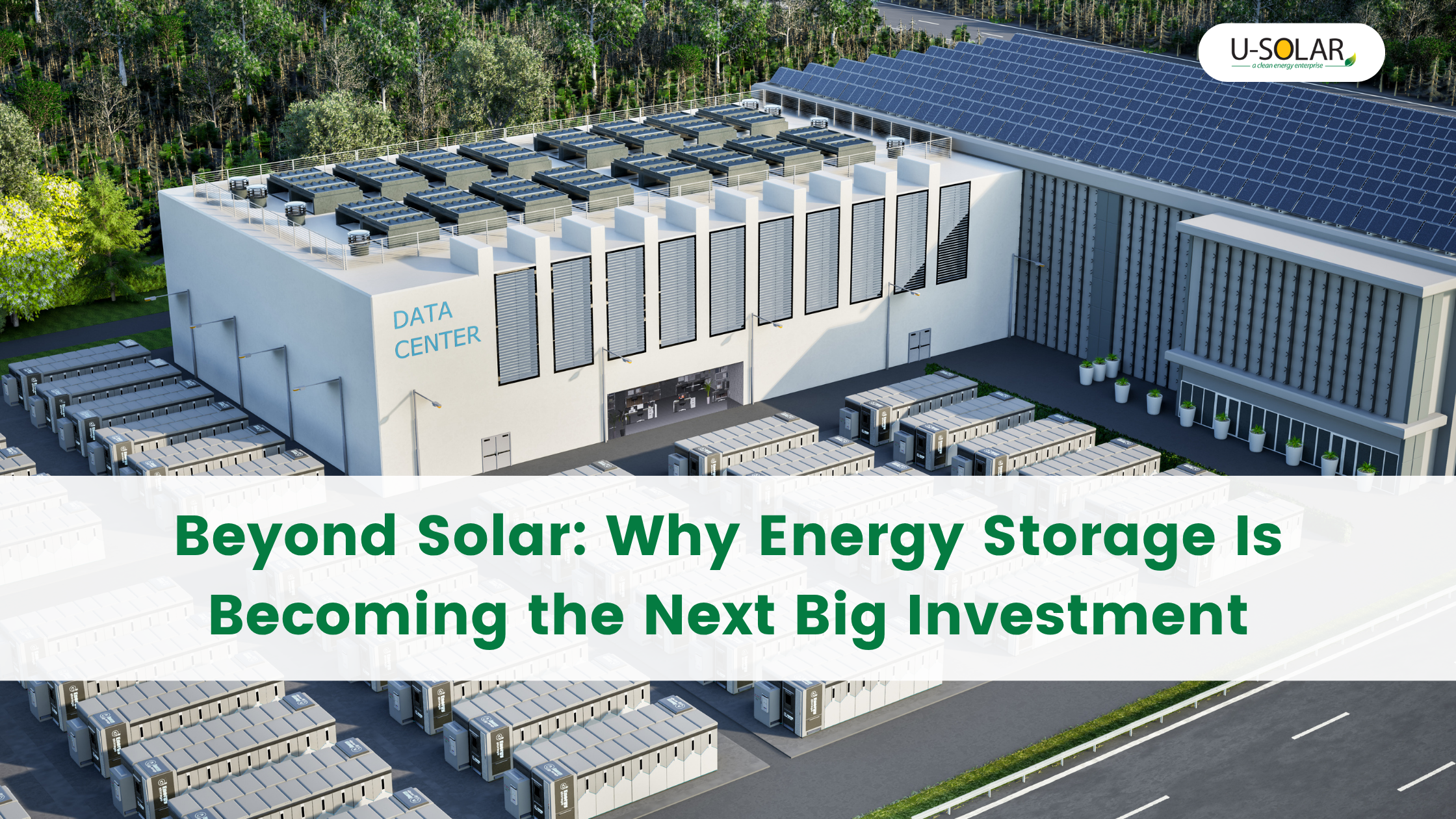
A data center may need reliable backup power. A factory may want to reduce peak electricity costs. A utility may require several hours of storage to shift renewable generation into the evening. A remote facility may need a combination of solar, batteries, and intelligent energy management.
This diversity creates opportunities across the energy-storage value chain, from battery manufacturing and system integration to software, project development, EPC services, operations, and maintenance.
India Could Be One of the Biggest Growth Markets
The opportunity becomes particularly interesting in India.
India is rapidly adding renewable generation while electricity demand continues to increase. Solar and wind are expected to play a major role in meeting future electricity requirements, but their variable nature makes storage increasingly important.
India’s renewable-energy expansion is already creating practical reasons to invest in storage. Transmission constraints, changing demand patterns, and the need to provide reliable power make flexibility increasingly valuable.
Commercial and Industrial Users Are Part of the Story
Large utility projects often receive the most attention, but commercial and industrial customers could become an equally important market.
For a manufacturing facility, an unexpected power interruption can disrupt production and damage equipment. For a data center, even a short interruption can have serious consequences.
A properly designed battery energy storage system can provide backup power, reduce dependence on the grid during peak periods, and improve the overall reliability of an energy system.
When combined with rooftop or ground-mounted solar, storage can create a more self-sufficient energy ecosystem.
This is particularly attractive for businesses that already have significant electricity consumption and are looking for greater control over energy costs.
Storage Is Becoming Infrastructure, Not Just Equipment
One of the biggest changes taking place is the way investors view energy storage.
Previously, batteries were often considered an additional component of a renewable-energy project. Increasingly, storage is being treated as critical infrastructure in its own right.
That distinction matters.
As renewable penetration rises, grids need flexibility. As electricity demand increases, peak management becomes more important. As businesses become increasingly dependent on digital infrastructure, power reliability becomes a competitive requirement.
The Next Energy Investment Cycle
Solar changed the way the world thinks about electricity generation.
Energy storage could change the way we think about electricity availability.
The next stage of the energy transition will not simply involve installing more solar panels and wind turbines. It will involve building an electricity system that can store, shift, balance, and intelligently manage the power they produce.
For investors, this creates an opportunity that extends far beyond batteries themselves. The emerging storage ecosystem includes technology providers, manufacturers, EPC companies, developers, software platforms, utilities, and businesses looking for greater energy independence.
The transition from solar to solar-plus-storage is already underway.
The question is no longer whether energy storage will become an important part of the clean-energy system. The more interesting question is how quickly the market will scale—and which companies will be best positioned to build the infrastructure behind the next generation of electricity.
Solar generates the energy. Storage makes it available when it matters. And that could make energy storage one of the defining investment opportunities of the next decade.